Master NEET Physics for a Top Rank
Comprehensive Preparation for Success - Study with Confidence
NEET UG 2026
Mechanics, Electrodynamics, Optics & Modern Physics
Aim for 160+ in Physics (180 Marks). • In-depth study materials for every chapter • NEET Previous Year Questions (PYQs) with Solutions • 1,500+ Physics Practice Questions • And much more
The Most Effective NEET Physics Resource. Ever.
Upgrade to premium for unlimited access to the Physics question bank, quizzes, mock tests, cheat sheets, and more. See pricing for more details.
For NEET UG aspirants, mastering the **NEET Physics syllabus for 2026** is often the deciding factor for securing a top All India Rank (AIR). This section, worth **180 marks**, tests both deep theoretical knowledge and sharp numerical problem-solving skills.
The official syllabus, based on the **Class 11 and 12 NCERT curriculum**, serves as the definitive roadmap for your preparation. The NEET Physics paper consists of 50 questions, of which candidates must attempt 45. A balanced focus across the entire syllabus is crucial for success.
This comprehensive guide provides a class-wise syllabus breakdown, chapter-wise weightage analysis, and essential preparation tips to help you conquer the NEET Physics section with confidence.
The **Class 11 NEET Physics syllabus** lays the critical foundation, covering fundamental areas like Mechanics, Thermodynamics, and Waves. A strong command of these **NCERT Class 11 topics** is essential for understanding the more advanced concepts in Class 12.
| Unit Name | Key Topics Covered |
|---|---|
| Physics and Measurement | SI units, errors in measurement, significant figures, dimensional analysis. |
| Kinematics | Motion in a straight line, vectors, scalar and vector products, motion in a plane, projectile motion, uniform circular motion. |
| Laws of Motion | Newton's laws, conservation of linear momentum, friction, dynamics of circular motion. |
| Work, Energy, and Power | Work-energy theorem, kinetic and potential energy, power, conservative forces, collisions. |
| Rotational Motion | Centre of mass, torque, angular momentum, moment of inertia, conservation of angular momentum. |
| Gravitation | Universal law of gravitation, Kepler's laws, gravitational potential energy, orbital velocity of satellites. |
| Properties of Solids and Liquids | Hooke's law, Pascal's law, Bernoulli's principle, viscosity, surface tension. |
| Thermodynamics | Laws of thermodynamics, heat, work, and internal energy, reversible and irreversible processes. |
| Kinetic Theory of Gases | Ideal gas equation, kinetic interpretation of temperature, degrees of freedom, law of equipartition of energy. |
| Oscillations & Waves | Simple Harmonic Motion (SHM), longitudinal and transverse waves, superposition, beats, Doppler effect. |
Begin Your Journey to a Top Medical College.
Join Thousands of Future Doctors.
Dive into our platform and start your journey to securing a top rank in NEET with BrainBird. We are here to support your learning and help you master Physics, Chemistry, Botany, and Zoology.

The **Class 12 NEET Physics syllabus** introduces advanced and high-weightage topics like Electrodynamics, Optics, and Modern Physics. Mastery of these **NCERT Class 12 chapters** is crucial for securing a high score.
| Unit Name | Key Topics Covered |
|---|---|
| Electrostatics | Electric charges, Coulomb's Law, electric field, Gauss's theorem, electric potential, capacitors. |
| Current Electricity | Ohm’s Law, resistance, Kirchhoff's laws, Wheatstone bridge, potentiometer. |
| Magnetic Effects of Current & Magnetism | Biot-Savart law, Ampere's law, force on moving charges, galvanometers, bar magnets. |
| Electromagnetic Induction & Alternating Current | Faraday's Law, Lenz's Law, self and mutual induction, AC circuits (LCR), transformers. |
| Electromagnetic Waves | Characteristics of EM waves, electromagnetic spectrum and its uses. |
| Optics | Reflection, refraction, lenses, prisms, optical instruments, wave optics (interference, diffraction, polarisation). |
| Dual Nature of Matter and Radiation | Photoelectric effect, Einstein's photoelectric equation, de Broglie relation. |
| Atoms & Nuclei | Bohr model, composition of nucleus, mass-energy relation, nuclear fission and fusion. |
| Electronic Devices | Semiconductors, p-n junction diode, Zener diode, transistors, logic gates. |
| Experimental Skills | Vernier calipers, screw gauge, simple pendulum, meter scale, and other key experiments. |
Our Platform Helps You Crack NEET Physics

Interactive Study Platform for NEET

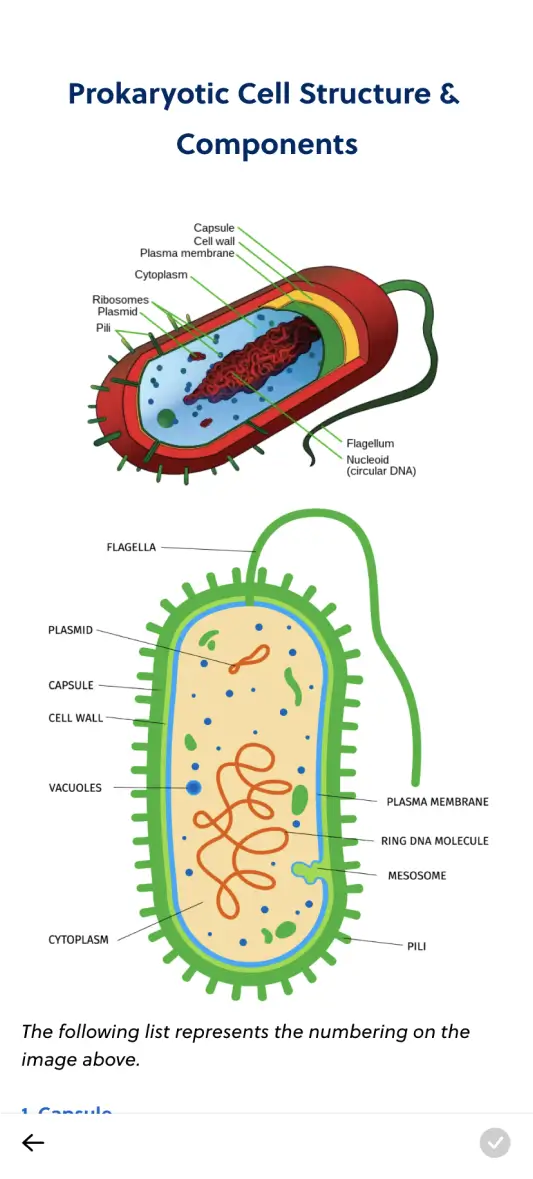
Smart preparation for **NEET 2026** involves focusing on high-yield chapters. Based on trends from previous years' papers, we've categorized the syllabus by weightage to help you prioritize your studies.
| Weightage Category | Key Chapters & Topics | Focus Area |
|---|---|---|
| High Weightage (Must-Do) | Mechanics (Laws of Motion, Work, Rotational Motion), Thermodynamics, Current Electricity, EMI & AC, Optics, Modern Physics (Dual Nature, Atoms, Nuclei). | Master concepts and solve a wide variety of numericals. |
| Medium Weightage (Important) | Kinematics, Gravitation, Electrostatics, Magnetic Effects of Current, Oscillations & Waves, Electronic Devices. | Ensure thorough knowledge and solve all PYQs. |
| Low Weightage (Quick Review) | Physics and Measurement, Properties of Matter, EM Waves, Experimental Skills. | Focus on NCERT, key formulas, and direct questions. |
To score 150+ in NEET Physics, you must master these high-yield topics. Focusing your efforts here will provide the maximum return on your study time.
- Mechanics: Newton's Laws, Work-Energy Theorem, Conservation of Momentum, Moment of Inertia (especially for standard shapes), and Conservation of Angular Momentum.
- Heat & Thermodynamics: Laws of Thermodynamics, Carnot Engine, and Kinetic Theory of Gases.
- Electrodynamics: Kirchhoff's Laws, Potentiometer, Faraday's Law of Induction, LCR Circuits, and properties of EM Waves.
- Optics: Young's Double Slit Experiment (YDSE), Lens Maker's Formula, and working of Optical Instruments.
- Modern Physics: Photoelectric Effect, Bohr's Model, de Broglie Wavelength, and Nuclear Fission/Fusion.
While **NCERT textbooks are the absolute foundation** for NEET Physics, certain reference books can help build strong problem-solving skills.
| Book Name | Author | Purpose |
|---|---|---|
| NCERT Physics Textbooks (Class 11 & 12) | NCERT | Core Concepts (Essential) |
| Concepts of Physics (Vol 1 & 2) | H.C. Verma | Conceptual Clarity & Problem Solving |
| Objective Physics for NEET (Vol 1 & 2) | D.C. Pandey | Extensive MCQ Practice |
| NCERT at your Fingertips | MTG Editorial Board | NCERT-based MCQ Practice |
Physics can be a rank-deciding subject. Follow these strategic tips to turn your hard work into a high score in the **NEET 2026 Physics** section.
- Build Concepts Before Formulas: Don't just memorize formulas. Understand the underlying concept and derivation first. This will help you apply them correctly in complex questions.
- Create a Master Formula Sheet: Maintain a dedicated notebook for all important formulas, derivations, and key concepts. Revise it daily.
- Practice MCQs Daily: Make it a habit to solve at least 30-40 Physics MCQs every day. Consistency is more important than long, infrequent study sessions.
- Master Previous Year Questions (PYQs): Solve the last 10-12 years of NEET/AIPMT papers to understand the exact pattern, difficulty level, and important topics.
- Analyze Your Mock Tests: After every mock test, spend more time analyzing your mistakes than you spent taking the test. Identify weak chapters and conceptual errors to work on.
What Our Students Are Saying
Master Every Subject for a Top All India Rank



Frequently Asked Questions